Why Free Casino Games Give You a False Sense of Survival

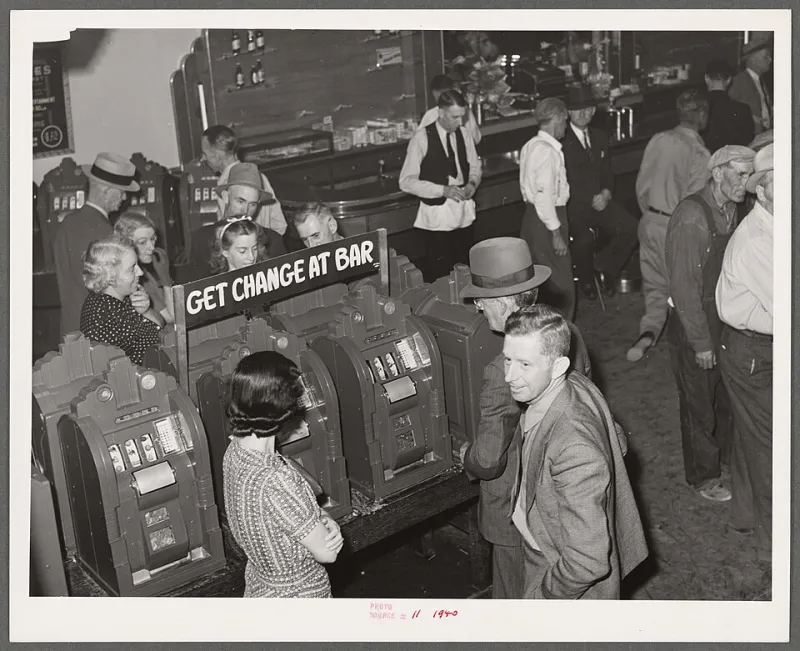
Photo: Millethills, CC0, via Wikimedia Commons
There's a moment most free casino players know well. You've just burned through your entire demo balance on a slot — wiped out in maybe twenty minutes — and then you hit the reload button without a second thought. Fresh chips appear. You're back in action. No harm done.
That frictionless reset is exactly what makes free play so deceptive.
When real money is on the line, there is no reload button. And the same losing streak that felt like a minor inconvenience in demo mode can carve a devastating hole in your actual bankroll. The culprit isn't bad luck alone — it's variance, and free casino games are almost perfectly designed to keep you from truly feeling it.
What Variance Actually Means (In Plain English)
Casino math gets dressed up in a lot of jargon, but variance is one concept worth nailing down before you play a single real-money session.
Put simply, variance describes how wildly a game's results swing around its average outcome. A low-variance slot pays out small wins frequently, keeping your balance relatively stable. A high-variance slot might go fifty, sixty, even a hundred spins without a meaningful payout — then drop a big hit out of nowhere.
The house edge tells you how much you'll lose on average over time. Variance tells you how bumpy the road to that average is going to be.
Here's where it gets important: a game can have a 96% RTP (return to player) and still drain your entire session bankroll before that long-run average ever gets a chance to kick in. That's not a flaw in the math. That's exactly how variance works. Short sessions — which is basically every session real people actually play — are dominated by variance, not averages.
How Demo Mode Hides the Damage
Free-to-play versions of casino games replicate the mechanics almost perfectly. The reels spin the same way. The RNG (random number generator) runs the same algorithms. The bonus rounds trigger at roughly the same frequency. On the surface, it really does feel like the real thing.
But there are two critical differences that completely distort your experience of variance.
First, there's the reload problem. When your demo balance hits zero, you refill it instantly. That means you never actually live through the consequences of a deep losing streak. You experience the losing spins, sure — but you never experience what it feels like to watch a real bankroll shrink to nothing and stay there. The psychological weight of that is enormous, and free play simply can't replicate it.
Second, demo stakes are almost always unrealistic. Most players spin at virtual $1 or $2 bets in demo mode because the fake money feels infinite. In a real session, a lot of those same players bet $0.20 or $0.50 because they're watching actual dollars disappear. That changes the math on how quickly variance can hit you. A high-variance slot that felt manageable at fake $2 spins becomes a completely different animal at real $0.25 spins, where your effective bankroll in terms of number of spins is much smaller relative to the swings you'll experience.
The Resilience Illusion
After enough time in demo mode, players develop what you might call a variance tolerance that doesn't actually exist in their real-money game. They've survived dozens of brutal losing streaks — on paper. They've ridden out the dry spells on high-volatility slots and come out the other side. They feel prepared.
What they've actually done is practice surviving losing streaks with unlimited ammunition. That's not resilience. That's a safety net that vanishes the second you make a deposit.
This gap between perceived and actual risk tolerance is one of the sneakiest problems in transitioning from free play to real-money gambling. You genuinely believe you know how to handle a rough patch because you've handled dozens of them in demo mode. But you've never handled one with a fixed bankroll and real consequences attached.
Calculating Your Actual Risk Before You Play
The good news is you can use free play to stress-test your bankroll strategy — you just have to approach it differently than most players do.
Here's a practical method worth trying before your first real-money session on any new game:
Set a hard stop on your demo balance. Decide on a starting amount that mirrors what you'd actually deposit — say, $100 in demo credits. Commit to stopping when it's gone. No reloads. This forces you to feel the real shape of a losing streak within a fixed budget.
Track your session length in spins, not time. Time is a terrible metric for bankroll planning. Spins aren't. Count how many spins your demo balance survives at your intended real-money bet size. If you're planning to bet $0.50 per spin with a $100 bankroll, that's 200 spins before you're broke at maximum loss. High-variance slots can absolutely eat through 200 spins without a single session-saving hit.
Run the same game ten times. One demo session tells you almost nothing. Ten sessions start to show you the real distribution of outcomes — how often you bust quickly, how often you run up a profit, and how often you grind slowly downward. That pattern is far more useful than any single result.
Calculate your "ruin threshold." This is the point at which your bankroll drops low enough that you can no longer bet at your target stake. If you're betting $1 per spin, your ruin threshold might be $20 — because at that point, you're down 80% and a few more bad spins end your session. Knowing where that threshold sits helps you set realistic stop-loss limits before emotions get involved.
Playing Free Smarter
Free casino games at Casino4Free aren't the enemy here. Used well, they're genuinely valuable tools. The problem isn't the games themselves — it's the false confidence that comes from using them without intentional structure.
Variance is the single biggest reason casual players get blindsided when they move to real money. They've seen the swings in demo mode, but they've never felt the financial weight behind them. That gap between seeing and feeling is where bankrolls go to die.
So the next time you fire up a free slot, try treating that demo balance like it's real. Set a limit. Don't reload. Track your spins. You might be surprised how quickly a game you thought you had figured out can flip the script when you're actually paying attention to the math.
Because the variance was always there. Free play just made it easy to ignore.