Knowing When to Quit Is the One Skill Free Casino Games Won't Teach You

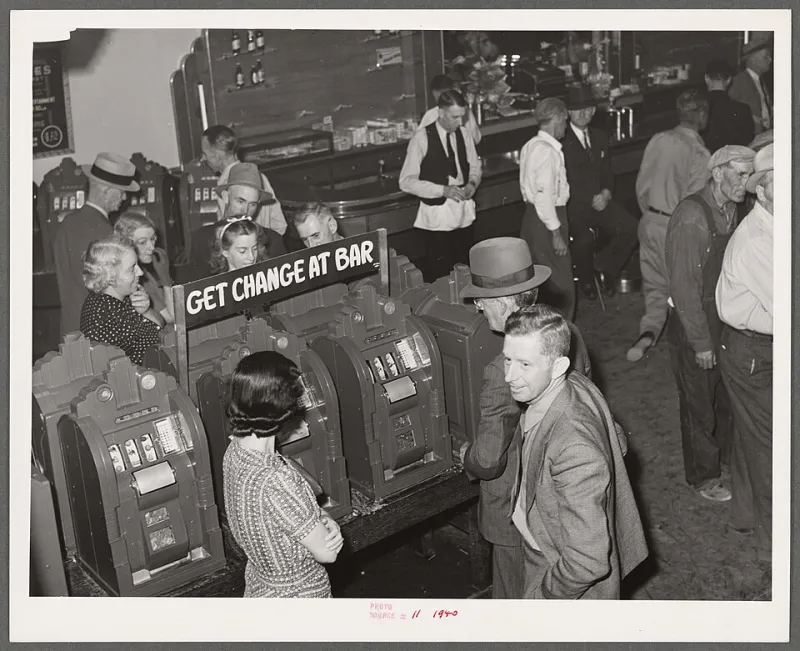
Photo: Jules Verne Times Two, CC BY-SA 4.0, via Wikimedia Commons
Free casino games get a lot of credit around here — and honestly, they deserve most of it. You can learn blackjack basic strategy without burning a dollar. You can figure out which slot volatility suits your personality before you ever fund a real account. You can practice poker odds while sitting in your pajamas on a Tuesday afternoon. That's genuinely useful stuff.
But there's a quiet gap in what free play actually teaches you, and it's a big one: when to stop.
Not how to stop when you're on a losing streak — that part feels obvious enough. The harder, sneakier problem is learning to walk away when things are going well. Or when things are going nowhere. Or when you've just been sitting there for two hours and the game has completely swallowed your evening.
Free play, by design, removes every natural stopping point. And that's a problem worth talking about.
The Infinite Chip Problem
Here's the core issue. In a real casino — whether you're on the floor in Vegas or logged into a real-money site — your session has a built-in boundary. Your wallet sets the limit. When the chips are gone, the session is over. That's a hard stop, and even if it's not the ideal kind of discipline, it's still discipline.
Free casino games don't work that way. Run out of virtual chips? Hit the reload button. Tap out your demo balance in ten minutes? It resets instantly. There's no financial friction, no moment of reckoning, no point where the game forces you to sit back and ask yourself whether continuing makes any sense.
The result is that free play quietly trains you to treat quitting as something you do only when you feel like it — not as something you plan for. And when you eventually move to real-money play, that habit follows you right through the door.
Why Quitting Ahead Feels Wrong (Even When It's Right)
There's a psychological phenomenon called the "hot hand fallacy" — the deeply human belief that a winning streak means more winning is coming. Casinos are built around exploiting this instinct, and free games do nothing to counteract it.
When you're up in a free session, the natural impulse is to keep going. You're not risking anything real, so why not ride it out? The problem is that this exact reasoning — I'm on a roll, might as well keep playing — is the same reasoning that turns a profitable real-money session into a breakeven one, or worse.
Free play gives you every reason to chase the feeling and zero reason to bank the win. There's no dollar amount sitting in your account that you'd be protecting. There's no tangible reward for logging off while you're ahead. So most players don't. They play until the streak ends, the session drags on, and the whole exercise becomes less about strategy and more about entertainment for its own sake.
That's fine, by the way — free games are entertainment. But if you're using them to sharpen your real-money game, this is a habit worth catching early.
Building Your Own Stop-Loss Before You Need It
The good news is that free play is actually the perfect environment to practice stop-loss discipline — you just have to be intentional about it. Nobody's forcing you to set limits on a free session, which means the ones you set are entirely self-imposed. And self-imposed limits are exactly the kind you need to strengthen before real money is on the line.
Here are a few approaches worth experimenting with:
Set a virtual bankroll and treat it like real money. Before you start a free session, decide on an amount — say, $200 in demo chips — and commit to not reloading when it's gone. Play the session as if that money is real. When it's gone, stop. This forces you to make decisions with consequence, even if the consequence is only psychological.
Define a win target before you spin. Decide in advance: if I double my starting stack, I'm done. Write it down if you have to. The goal isn't to leave money on the table — it's to practice the discipline of recognizing a win and choosing to protect it. That's a muscle that needs reps.
Use a time limit, not just a money limit. Set a 30-minute timer and stop when it goes off, regardless of where you stand. This teaches you that sessions have natural endpoints and that it's okay to walk away mid-streak. Real-money sessions should have time boundaries too, and free play is where you build that reflex.
Log your sessions, even fake ones. Keep a simple note on your phone: date, game, starting balance, ending balance, how long you played. Seeing your own patterns in writing is surprisingly sobering. It also makes your free-play practice feel more serious, which makes the discipline you're building more transferable.
The Surrender Mindset Isn't Weakness — It's Strategy
In blackjack, surrendering your hand at the right moment is mathematically correct play. It feels like giving up, but it's actually protecting your expected value over the long run. The same logic applies to knowing when to end a gambling session.
Walking away isn't failure. Walking away when you're ahead is, in many ways, the whole point. The casino's edge is built on the assumption that you'll keep playing long enough for the math to catch up with you. Every session you end while you're still in positive territory is a session where you beat the system — at least that one time.
Free games don't reward that behavior. There's no incentive structure that celebrates you for logging off. But real-money gambling absolutely does reward it, in the most direct way possible: you keep what you won.
What Free Play Can Still Do For You
None of this means free casino games aren't worth your time — they absolutely are. This site exists because free play is genuinely valuable as a learning tool, a low-pressure entertainment option, and a way to explore games before you commit real dollars. That's all still true.
But go in with eyes open. Free play teaches you the mechanics of games really well. It teaches you almost nothing about the emotional and psychological discipline required to gamble responsibly with real stakes.
The players who get the most out of free practice are the ones who use it to simulate real conditions — including the hard part. Set your limits before the session starts. Respect them when the session gets interesting. Walk away when you're supposed to, even when every instinct says to keep spinning.
That's the skill the house is counting on you never developing. Might as well prove them wrong for free.