Same Spin, Different Game? The Truth About How Free and Real-Money Slots Actually Work
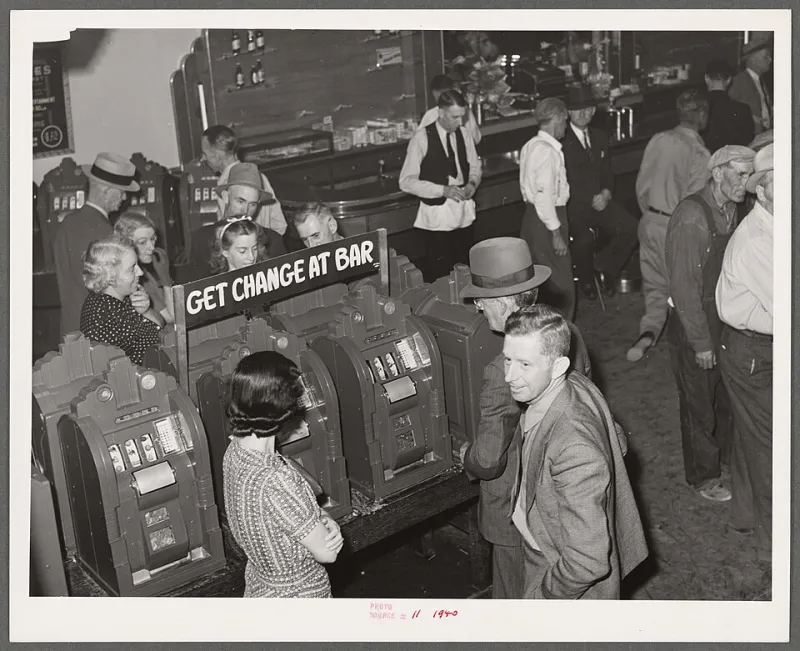
Photo: Arthur Rothstein, Public domain, via Wikimedia Commons
If you've spent any time playing free slots on Casino4Free before taking your shot at a real-money game, you've probably had this thought at least once: Why does this feel so different? The free version seems looser, more generous, like wins are practically falling out of the screen. Then you switch to real money and suddenly the reels feel like they're fighting back.
Is that just in your head? Or is something genuinely different happening behind the scenes?
The honest answer is: a little of both. Let's break it down.
The RNG: The Engine Behind Every Spin
Every online slot — free or real money — runs on a Random Number Generator, or RNG. This is a piece of software that produces thousands of number sequences per second, each one mapping to a specific reel outcome. When you hit that spin button, the game grabs whatever number the RNG is on at that exact millisecond and translates it into symbols on the screen.
Here's the critical part: a properly certified RNG doesn't know whether you're playing with free credits or real cash. It has no awareness of your account balance, your session length, or whether you've deposited money. The math behind each spin is, in theory, identical.
Reputable online casinos — especially those licensed and audited for US-facing markets — are required to use RNGs that pass independent testing from organizations like iTech Labs or GLI (Gaming Laboratories International). These audits verify that outcomes are statistically random and not manipulated based on game mode.
So at a certified casino, the algorithm itself isn't cheating you. The feel of the difference is coming from somewhere else.
RTP: The Number That Actually Matters
Every slot has a Return to Player percentage, or RTP. This number tells you what portion of all money wagered on that game gets paid back to players over millions of spins. A slot with a 96% RTP will, theoretically, return $96 for every $100 wagered over a long enough sample.
Here's where things get interesting for free-play users: some online casinos run their demo versions with a different RTP configuration than the live real-money version.
This isn't always shady. Sometimes it's a technical default — demo modes might load a base game configuration that hasn't been tuned to the casino's specific RTP deal with the software provider. Other times, it's a deliberate marketing choice. A more generous demo experience gets players hooked. That's just business.
The takeaway? If you're using free play to test a game's volatility or frequency of wins, you may not be getting an accurate preview of how it behaves with real stakes. Always check the published RTP for the real-money version, which reputable casinos list in the game info panel.
Volatility: The Variable That Free Play Struggles to Teach
RTP is a long-run average. In the short run, what you feel is volatility — also called variance. A high-volatility slot pays out big wins infrequently. A low-volatility slot pays smaller amounts more often.
Free play sessions are usually short. You spin a couple hundred times, form an impression, and move on. The problem is that a few hundred spins is nowhere near enough data to understand a slot's true volatility profile. You might hit a bonus feature twice in 50 spins on a high-volatility game and think it's a frequent hitter — then grind 300 real-money spins without triggering it once.
Free credits give you a taste, but they can't replicate the psychological weight of a 200-spin drought when real dollars are disappearing. That experience is genuinely different, and no algorithm change is required to create it. Your brain does the work all on its own.
The Psychology Layer: Why Free Wins Feel Bigger
Let's talk about what's happening upstairs when you play for free versus for real.
When there's no real money at stake, your brain's threat-detection system — specifically the amygdala — stays relatively calm. You're more relaxed, more patient, and more willing to ride out losing streaks. Wins feel fun and exciting. Losses feel like nothing.
Switch to real money and the neurochemical picture changes completely. Losses trigger a stress response. Near-misses feel genuinely painful. The anticipation before each spin carries actual tension. Your brain is running a completely different program, even though the slot machine is running the exact same one.
This is why so many players report that real-money slots feel "tighter" — the game hasn't changed, but your perception of every outcome has shifted dramatically.
What Reputable Casinos Are Actually Required to Do
If you're playing at a licensed US-facing online casino (think states like New Jersey, Pennsylvania, Michigan, or Connecticut where regulated iGaming is legal), the casino is legally obligated to ensure their RNG is independently verified and that the RTP advertised matches what's actually running. Demo and real-money versions of the same game should, by regulation, use the same certified RNG core.
That said, "same RNG core" doesn't always mean "identical configuration." The RTP can still be adjusted within the game's published range, and some software providers offer operators multiple volatility settings for the same slot title. A casino might run a game at 94% RTP while another runs the same title at 97% — both are technically within the game's certified range.
This is why casino reviews matter. Here at Casino4Free, we dig into this stuff so you know what you're walking into before a single real dollar leaves your wallet.
How to Use Free Play Smarter
Free spins aren't useless — you just need to use them correctly. Here's how to actually learn something from them:
- Track your session data. Count spins between bonus triggers. Note the size of wins relative to your bet. Over 200+ spins, patterns start to emerge.
- Test bet-sizing strategies. Free play is perfect for experimenting with flat betting versus escalating bets without any financial consequence.
- Get familiar with the mechanics. Bonus features, multiplier rules, and payline structures are confusing the first time. Learn them for free.
- Don't use free play to predict short-term results. It won't tell you when the next big win is coming. Nothing will.
The Bottom Line
The slot machine algorithm isn't secretly working against you when real money enters the picture — at least not at a reputable, regulated casino. The RNG is the RNG. But the experience of playing for free and playing for real is genuinely different, thanks to potential RTP configuration differences in demo modes and the very real psychological shift that happens when your own money is at stake.
Free play is a valuable tool when you treat it like one: a low-stakes classroom, not a crystal ball. Understand its limits, use it to build mechanical familiarity, and go into real-money sessions with realistic expectations. That's how you actually get an edge — not by assuming the free version told you everything you need to know.